공기질 · what the numbers mean
Seoul air quality, for the people running in it.
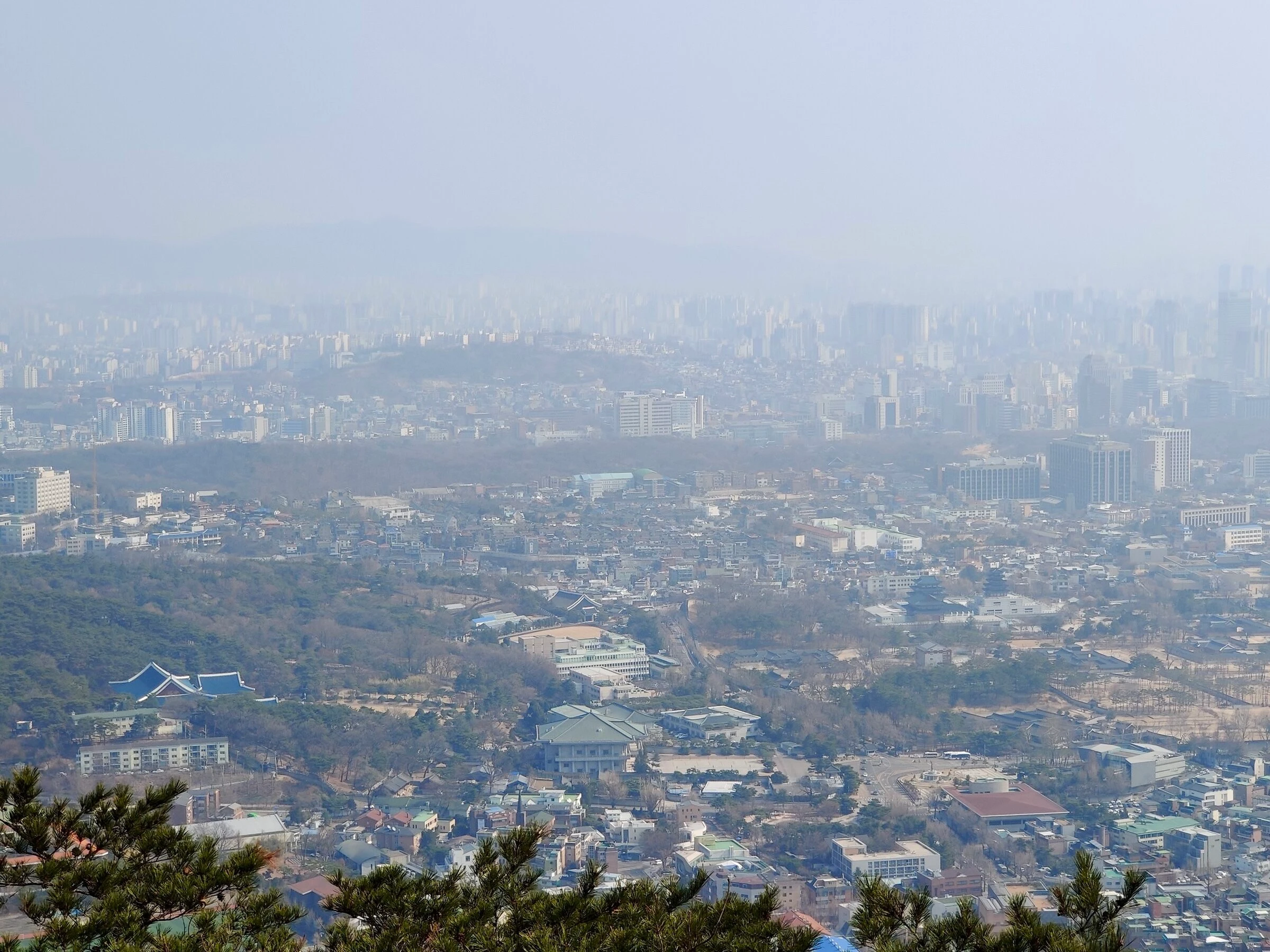
Seoul’s air has a worse reputation than it deserves, and the apps do not help: three of them will give you three different numbers for the same morning. Only one of those is worth trusting, and only a handful of mornings a year are worth changing your plan for.
There is really only one number
PM2.5, the fine particles, in micrograms per cubic meter. Small enough to reach deep into the lungs, which is why every health guideline is built on them. Running changes the math: at an easy pace you move roughly ten times the air you do at rest, through your mouth rather than your nose, so the same air is a bigger dose delivered deeper. A runner needs a lower threshold than a pedestrian, and on a marginal day the honest call is usuallyrun easier rather than stay in.
Check what your app is showing you. PM2.5 is a physical quantity; AQI is an index built on top of it, and every country draws the lines somewhere else. A headline reading of 152 means nothing until you know whose scale it is. Micrograms are portable, so learn the micrograms.
What each number should change
PM2.5 in µg/m³, on Korea’s official daily grades. These are the cut points we score against, so this page and the dashboard never disagree.
| PM2.5 | Grade | The call |
|---|---|---|
| 0 – 15 | 좋음 · Good | Run what you planned. |
| 16 – 35 | 보통 · Moderate | Run normally. Hard sessions fine. |
| 36 – 50 | 나쁨 · Unhealthy | Run easy. Move the intervals. |
| 51 – 75 | 나쁨 · Unhealthy | Short and easy, or indoors. |
| 76 + | 매우 나쁨 · Very unhealthy | Treadmill. |
These are daily grades, and air moves through the day. A reading of 45 at six can be under 20 by eleven, so check the shape of the curve before writing off a day.
One of these is a measurement. Two are guesses.
“Right now” and “Thursday” are not the same kind of thing, and almost no app makes the difference visible.
- 01
AirKorea ground stations
한국환경공단 · dozens across Seoul
The only one that is a measurement. Take every “right now” from here. It tells you nothing about tomorrow.
- 02
CAMS
Copernicus / ECMWF · hourly, five days
Gives you the shape of the day, so you can see the dip that lets you run at seven instead of five. It is a model on a grid, and it runs high in the early morning.
- 03
AQICN daily outlook
aqicn.org · one number per day, a week out
Reaches furthest and is Korea-aware, but a day-average hides the shape, so it cannot tell you when to go.
Trust the instrument for right now. Treat anything past tomorrow as a shape rather than a number.
Seoul’s air has a calendar
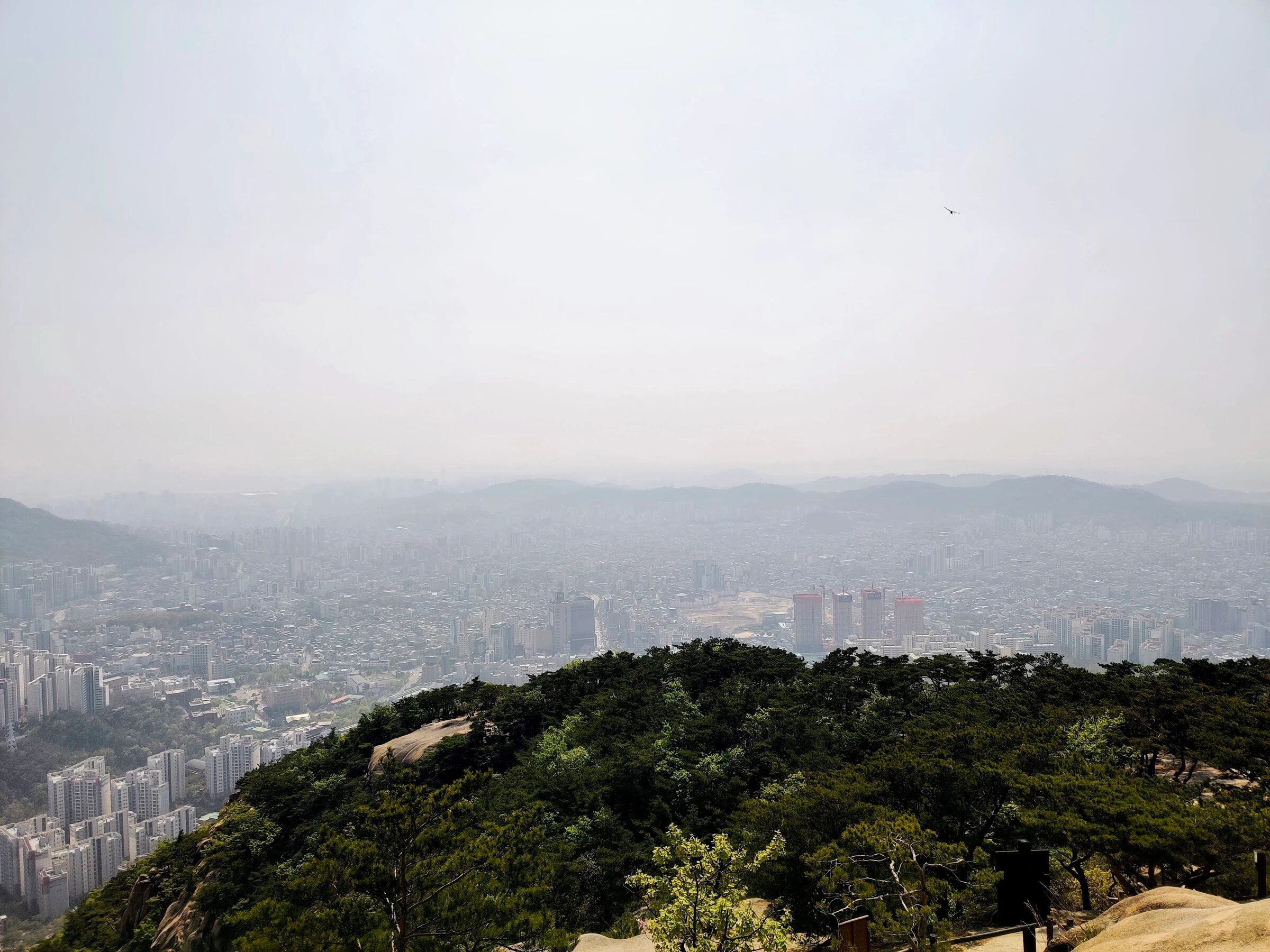
Spring is 황사 (hwangsa, yellow dust) season, when weather systems lift soil off the deserts of Mongolia and northern China and carry it east. Summer has the cleanest air of the year, because the monsoon scrubs the atmosphere every few days; what limits a summer run is heat, not air.Autumn is the good season, which is why the race calendar is stacked into it. Winter brings the quieter problem: cold, still days trap everything the region produces under an inversion, and those stretches last longer than any dust storm.
Desert dust is coarse, so PM10 climbs far faster than PM2.5 and the gap between them opens up. Combustion smog is fine, so the two track each other. Our dashboard flags likely dust when PM10 reaches 80 µg/m³ and sits at twice PM2.5 or more, because a mask earns its keep against coarse dust and does much less against the fine-particle kind.
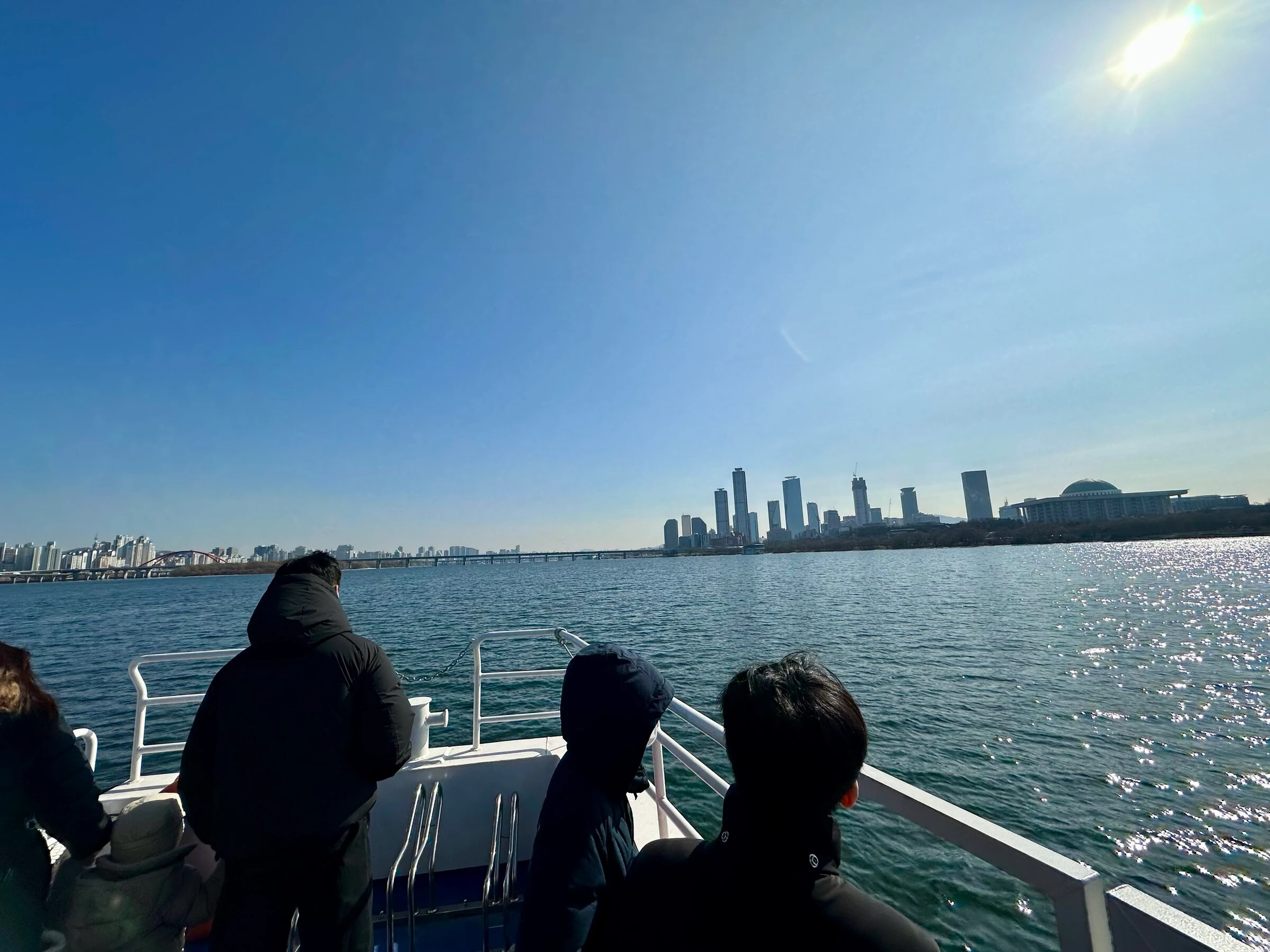
Reading a Seoul morning in thirty seconds
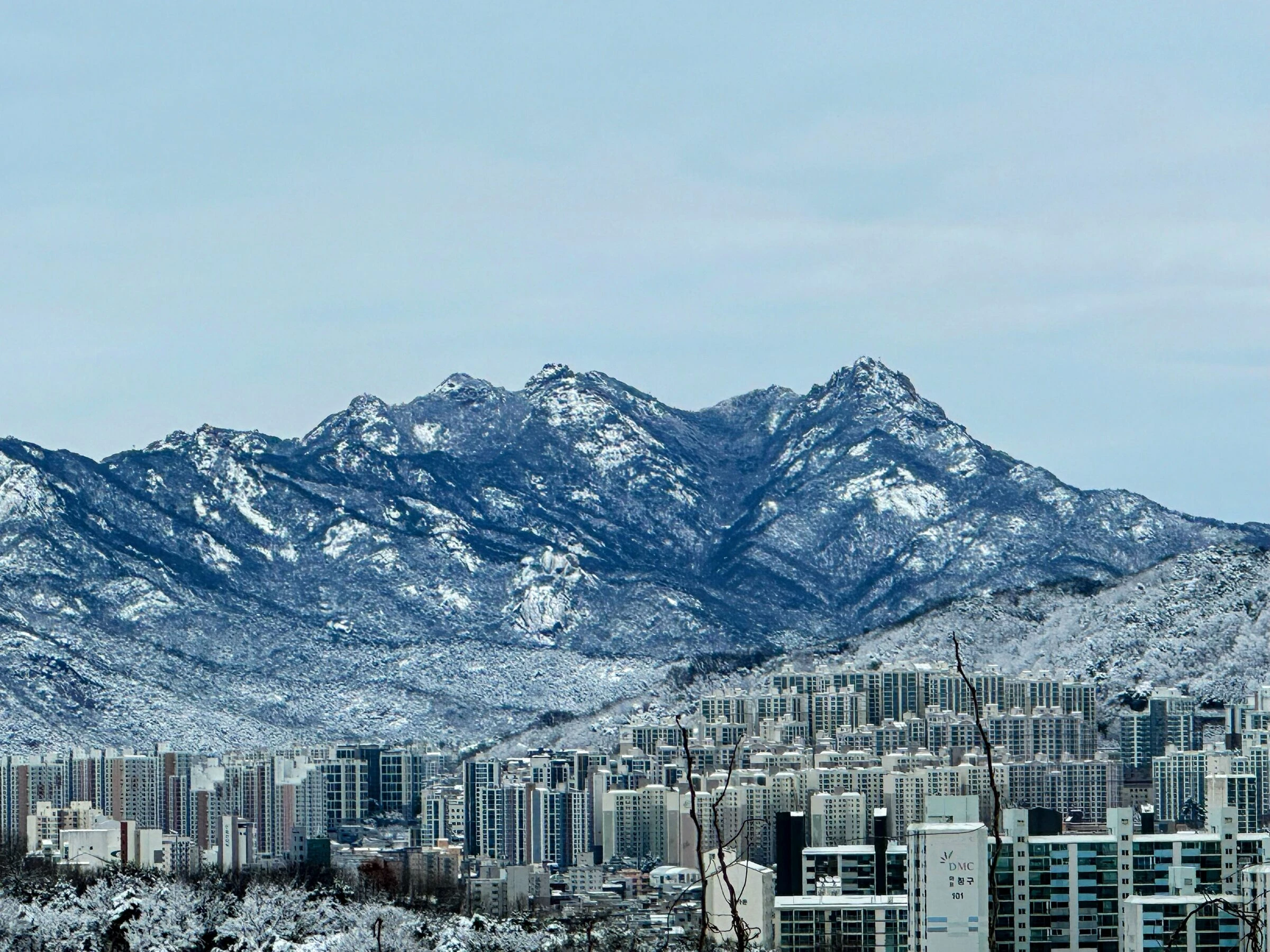
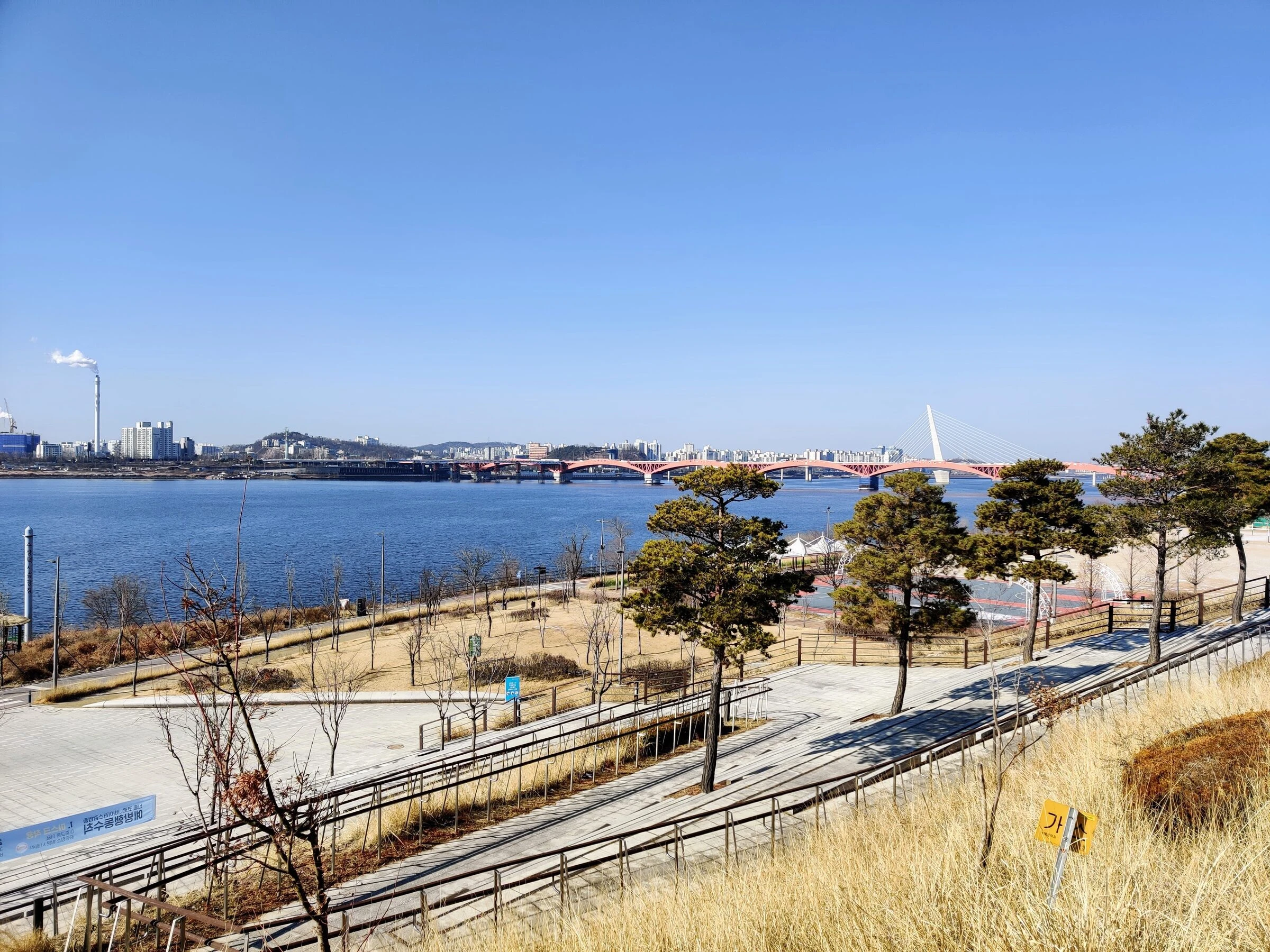
Look at the mountains. From the river you should see Bukhansan’s ridge. When the skyline is there but the mountains behind it have gone soft, that is your answer.
Read micrograms, not the index. Under 35 and you are running.
Compare PM10 to PM2.5. Double or more, with PM10 at 80 or above, means dust rather than smog.
Look at the curve, not the instant. The question is rarely whether today is bad. It is which hour is best.
All four are on the Seoul running weather dashboard, per zone, scored for running rather than general health.
Common questions
Is the air in Seoul bad for running?
Less than its reputation suggests. Most of summer and autumn sits at or under the WHO 24-hour guideline of 15 µg/m³ of PM2.5. The problem is concentrated into a handful of spring dust days and some winter inversions, so the useful skill is knowing which mornings to move, not avoiding the city.
What is a safe PM2.5 level to run in?
Under 15 µg/m³, run whatever you like. Between 36 and 50, keep it easy and save hard sessions for another day, because your ventilation rate at threshold effort is many times what it is at rest. Above 75, use a treadmill. Those cut points match Korea’s official 좋음 / 보통 / 나쁨 grades.
What is the difference between AQI and PM2.5?
PM2.5 is a physical concentration, micrograms of fine particles per cubic meter. AQI is an index built on top of it, and every country draws the lines differently, so identical air scores differently in Korea, the United States and Europe. Micrograms are the number worth learning.
When is 황사 (yellow dust) season in Korea?
Roughly March to May, when low-pressure systems lift desert soil out of Mongolia and northern China and carry it east. It is coarse dust, so it drives PM10 up far more than PM2.5, and that signature is how you tell it apart from ordinary smog.
Does a mask help when running in bad air?
More against spring dust than winter smog, because coarse particles are easier to catch. But any mask that filters meaningfully also makes breathing harder, which is a real cost mid-run. On a genuinely bad day, moving the session indoors beats filtering your way through it.
Which app should I use for air quality in Seoul?
Ours, from August. The Run With Me Seoul app puts the live station reading, the hourly curve and a running-specific score in one place, per zone, so you are not cross-checking three apps before a morning run. The web dashboard already does the same thing today. Whatever you use, read the micrograms rather than the headline index, and the hourly curve rather than the daily number.
Run it with someone who checks this every morning
I read these numbers before every session, which is how the dashboard came to exist. On a guided run you get the route, the pace, and someone who already knows whether this is a river day or a move-it-later day.
More in the Seoul running guide, or browse every mapped route andthe Korean race calendar.